- Heavy things go in small boxes, light things in large boxes.
- Label by destination room and keep an essentials box.
- Never leave gaps — movement is what breaks things.
Good packing is mostly about weight distribution and filling gaps. Get those two right and almost nothing breaks in transit, regardless of how far the van travels.
What to buy before you start
- Small double-wall boxes for books, tools and tinned food.
- Large boxes for bedding, cushions and clothing.
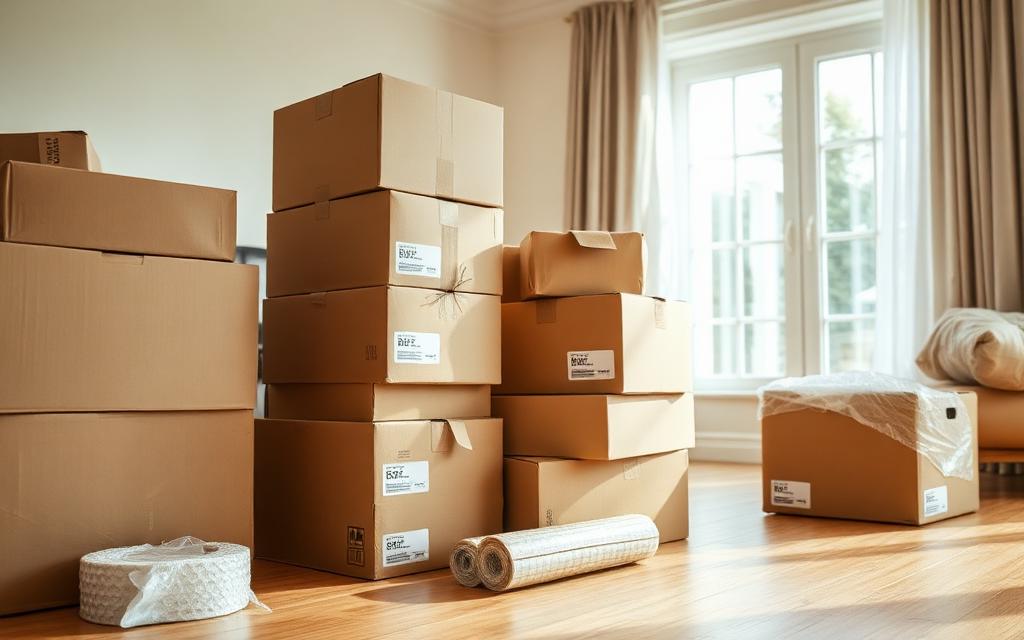
- Bubble wrap, packing paper and at least two rolls of tape per room.
- A thick marker and, ideally, coloured labels per room.
Kitchen
Plates travel on their edge, not stacked flat — wrap each one and stand them vertically like records. Glasses go in a cell divider or wrapped individually with paper stuffed inside. Empty, defrost and dry the fridge and freezer 24 hours ahead.
Bedrooms
Leave clothes on hangers and bag them in groups of ten, or use wardrobe boxes. Drawers can often stay full if the unit is solid — ask your crew first. Keep bed bolts and fixings in a labelled bag taped to the headboard.
Living room
- Photograph the back of the TV before unplugging anything.
- Screens travel upright, never flat, ideally in the original box.
- Wrap table legs separately once removed.
- Books in small boxes only — a large box of books is unliftable.
Bathroom and last-day box
Seal every liquid with tape over the cap and bag it. Then pack one clearly marked essentials box: kettle, mugs, tea, toilet roll, soap, towels, phone chargers, medication, scissors and a basic toolkit. It goes in the van last and comes out first.
If a box rattles when you tilt it, it needs more paper. Movement is what causes damage, not distance.